
Montana MVD Permit Practice Test 12
- Questions33
- Correct to pass27
- Passing score82%
- Minimum age14 years 6 months
-
1. The only person offering you a ride home has been drinking. What should you do?
Show answer
Answer B: Do not get in; find another way home
A passenger in an impaired driver's vehicle shares all of the risk and can do nothing about it from the seat, so the only safe answer is another ride.
-
2. A vehicle in the lane beside you has stopped at a crosswalk. What should you do?
Show answer
Answer C: Stop as well, because that driver may be yielding to a pedestrian you cannot see
The stopped vehicle hides the crosswalk from you, and passing it is a leading cause of collisions with pedestrians who are already crossing.
-
3. Traffic is entering the freeway from a ramp ahead of you and you are in the right lane. What should you do?
Show answer
Answer C: Move to another lane if it is safe, or adjust your speed to make room
Merging drivers may have little room to adjust. Helping them in by changing lanes or easing your speed prevents conflicts even though they must legally yield to you.
-
4. When is it acceptable to reach into the back seat for something while driving?
Show answer
Answer A: Never; stop somewhere safe instead
Twisting round takes your eyes off the road and your control of the wheel with it, so anything in the back seat waits until the car is stopped.
-
5. The vehicle you have borrowed is larger and heavier than your own. How should you drive it?
Show answer
Answer B: Allow more room for stopping and for turns until you are used to it
Extra weight and length mean longer stopping distances and wider turns, so give yourself more room until you are used to it.
-
6. You have just merged onto a freeway from an entrance ramp. What should you do next?
Show answer
Answer C: Settle into the right lane and build up speed before changing lanes
Crossing lanes while you are still below the speed of the traffic forces other drivers to brake, so the speed comes first and the lane change second.
-
7. How do worn tires and worn brakes affect your ability to stop?
Show answer
Answer C: They lengthen the stopping distance, especially on a wet road
Worn tread cannot clear water and worn brakes cannot produce full force, so both stretch the distance needed to stop.
-
8. You are driving along a street lined with parked cars. What should you watch for?
Show answer
Answer B: Doors opening, vehicles pulling out and pedestrians stepping from between cars
Parked cars hide people and can move without warning. Keep as much space from them as you safely can and cover the brake.
-
9. In normal operation, which indication always comes between a green and a red on the same signal face?
Show answer
Answer C: A steady yellow
The yellow change interval must follow every green or green arrow, so a signal can never jump straight from green to red.
-
10. The brake pedal goes to the floor and the vehicle does not slow. What should you try first?
Show answer
Answer C: Pump the pedal quickly to try to build pressure
Most vehicles have a split braking system, so rapid pumping can often build enough pressure to slow you. If it does not, use the parking brake gradually.
-
11. You are driving in the left lane at the posted speed limit and a line of vehicles has built up behind you. What should you do?
Show answer
Answer D: Move into a lane on your right when it is safe and let the traffic behind go by
Most states require traffic moving slower than the flow to keep right and reserve the left lane for passing, so a driver holding up a line of vehicles should move right when it is safe rather than block the lane.
-
12. Another driver takes a right of way that was legally yours. What should you do?
Show answer
Answer A: Give way to the other driver and avoid the crash, whatever the law says
Right of way is something you give, not something you take, and being in the right is no protection in a collision.
-
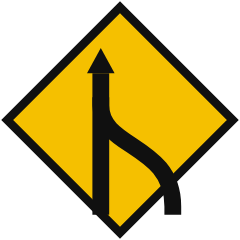
13. Why does the situation ahead of this sign deserve extra care from a motorcyclist?
Show answer
Answer C: Because a narrow machine is easy to overlook in a mirror or a blind spot
A motorcycle fills very little of a mirror and disappears easily into a blind spot, so the rider should adjust speed and lane position to stay visible where the streams come together.
-
14. Your power steering fails while you are driving. What happens and what should you do?
Show answer
Answer B: Steering becomes much harder but still works, so slow down and pull off the road
Without power assistance the steering still works, but it takes much more effort, especially at low speed. Keep both hands on the wheel and get off the road.
-
15. You are waiting in a center two-way left-turn lane. What should you expect from oncoming traffic?
Show answer
Answer A: Oncoming drivers may enter the same lane to prepare their own left turns
Both directions share a two-way left-turn lane, so an oncoming vehicle may be waiting in it and you must never treat it as yours alone.
-
16. You are clear of the tracks after your vehicle stalled on a crossing. Whom should you contact?
Show answer
Answer C: The emergency number posted on the blue sign at the crossing, or 911
Grade crossings carry an emergency notification sign with a railroad phone number and a crossing identification number so that approaching trains can be stopped, and 911 works if that sign is not visible.
-
17. What is the Montana minimum liability limit for bodily injury to or death of two or more people in one accident?
Show answer
Answer B: $50,000
Montana sets $50,000 as the minimum for bodily injury to or death of two or more persons in any one accident.
-
18. When is switching traction control off sometimes useful?
Show answer
Answer A: When you need spinning wheels to rock out of deep snow or mud
Rocking a stuck vehicle free needs the wheel spin that the system normally prevents. Switch it back on as soon as you are moving again.
-
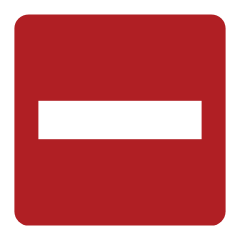
19. A driver hunting for an on-ramp meets this sign at the mouth of the pavement ahead. What is the correct action?
Show answer
Answer C: Keep out of that roadway and look for the proper approach elsewhere
The restriction is absolute and does not depend on how much traffic is present, so the driver has to reach the highway by an approach built for entering vehicles.
-
20. The queue for an exit ramp has backed up into the right lane of the highway. What should you do if you want that exit?
Show answer
Answer B: Join the back of the queue in the lane instead of cutting in later
Passing a queue and forcing in at the front stops the whole line, and using the shoulder puts you where broken-down vehicles are expected to be.
-
21. Your light turns green, but a vehicle from the cross street is still finishing a turn inside the intersection. What should you do?
Show answer
Answer B: Wait until that vehicle has cleared the intersection
A green indication lets you proceed only after yielding to pedestrians in the crosswalk and to vehicles already lawfully within the intersection.
-
22. A snow squall cuts visibility to almost nothing while you are on a highway. What must you not do?
Show answer
Answer D: Stop in a travel lane and wait for the squall to blow through
A vehicle stopped in a lane in a whiteout is invisible until someone hits it. Slow gradually and keep moving until you can leave the roadway completely.
-
23. How far should the driver chest be from the steering wheel?
Show answer
Answer B: At least about ten inches
The airbag deploys with great force in the first instants of a crash, so about ten inches between your chest and the wheel is the recommended minimum.
-
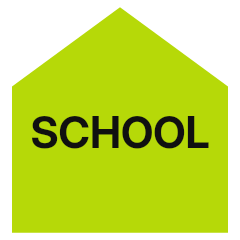
24. What must a driver be ready to do along the stretch of road where this sign is posted?
Show answer
Answer D: Slow down and stop for a child who steps into the roadway
Children misjudge speed and distance and act without warning, so the driver reduces speed, covers the brake and scans the sidewalks and parked vehicles.
-
25. Where is the no passing zone pennant sign installed?
Show answer
Answer A: On the left side of the roadway
The pennant is placed on the left side of the roadway at the beginning of the no-passing zone, in the field of view of a driver who is thinking about overtaking.
-
26. A tow truck with flashing amber lights is loading a car on the shoulder ahead. How should you treat it?
Show answer
Answer B: Give it the same room as an emergency vehicle
Tow operators, utility crews and highway workers face the same danger from passing traffic, so move over or slow down for their flashing amber lights too.
-
27. You pass into a work zone with a reduced speed limit but you see no workers. What speed applies?
Show answer
Answer D: The posted work zone limit, whether or not workers are present
A posted work zone speed limit is a regulatory limit in force at all times, and narrow lanes and uneven surfaces remain dangerous when nobody is working.
-
28. You are the first to arrive at a crash on a rural road. What should you do first?
Show answer
Answer C: Park well clear of the scene, put on your hazard lights and call for help
Getting trained help on the way and keeping the scene visible does more good than anything an untrained bystander can do.
-
29. Why should you not leave the engine running when you walk away from your vehicle?
Show answer
Answer C: Because the vehicle can be stolen or can move on its own
An unattended running vehicle is an easy theft and, if the transmission slips or is knocked out of park, it can roll away with nobody at the wheel.
-
30. The divided highway ends warning sign means that
Show answer
Answer D: the median separating the directions ends and the road returns to two-way operation
Beyond this sign opposing traffic is no longer separated by a median, so the driver must keep right and expect vehicles approaching in the adjacent lane.
-
31. Why are drivers required to turn the front wheels when parking on a grade?
Show answer
Answer A: So that a vehicle that starts to roll leaves the traffic lanes instead of entering them
The wheel position is a last line of defense if the parking brake or transmission fails, directing the vehicle into the curb or off the roadway.
-
32. A lane is marked with a large white bicycle symbol and chevrons, but there is no separate bicycle lane. What does it mean?
Show answer
Answer A: Bicyclists may use the whole lane, so follow or pass with care
A shared lane marking shows that bicyclists and drivers use the same lane and positions riders away from parked car doors, so passing means changing lanes.
-
33. What most often starts a rear wheel skid?
Show answer
Answer A: Too much speed, braking or acceleration for the grip available
A skid begins when what you ask of the tires exceeds what the surface can give, which is usually a matter of speed and of how abruptly you use the controls.